

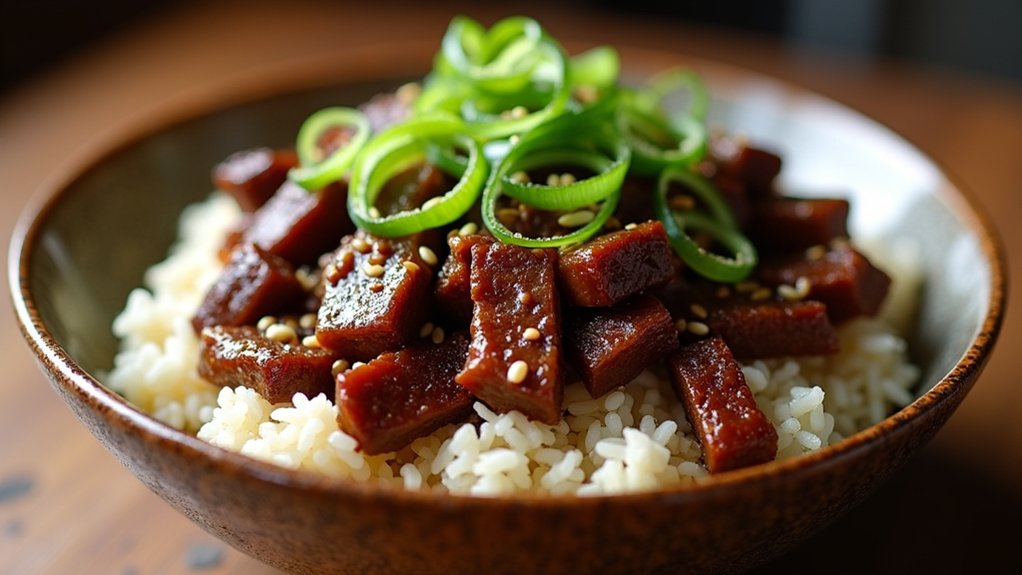
I’m so excited to share these 13 Asian rice bowl recipes that are bursting with bold flavors. Think vibrant Korean Bibimbap with colorful veggies and perfectly marinated proteins. Or the creamy delight of Indian Butter Chicken served over fluffy basmati rice. Each recipe offers a unique taste experience, celebrating a variety of ingredients and cooking techniques. Ready to spice up your meal routine with these delicious creations?
Korean Bibimbap Rice Bowl
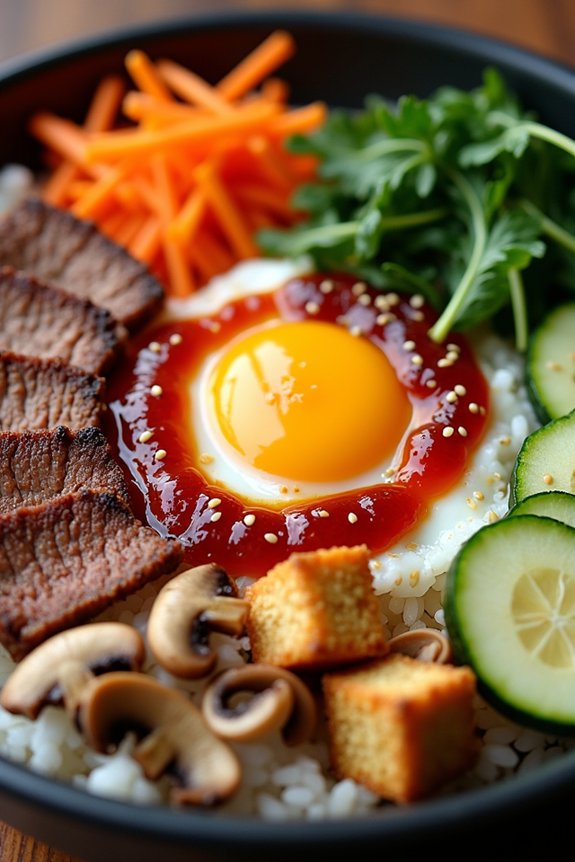
The magic of bibimbap lies in its presentation and the way each ingredient is individually prepared before being combined. This dish is a celebration of colors and nutrients, featuring a variety of vegetables such as carrots, spinach, bean sprouts, and shiitake mushrooms, each seasoned separately to enhance their natural flavors.
The protein, often beef or tofu, is marinated to perfection, adding depth to the dish. The final touch is the beautifully fried egg with a runny yolk, which, when mixed into the rice, creates a creamy texture that ties all the elements together. This dish isn’t only satisfying but also highly customizable, allowing you to adjust the spice level and ingredients to suit your taste.
Ingredients (serves 4-6):
- 2 cups white rice
- 1 pound beef sirloin (or tofu for a vegetarian version)
- 2 carrots, julienned
- 1 zucchini, julienned
- 1 cup bean sprouts
- 1 cup spinach
- 4 shiitake mushrooms, sliced
- 4 eggs
- 2 tablespoons soy sauce
- 1 tablespoon sesame oil
- 1 tablespoon vegetable oil
- 1 tablespoon sugar
- 2 garlic cloves, minced
- Salt and pepper to taste
- Gochujang (Korean chili paste)
- Sesame seeds for garnish
Cooking Instructions:
- Prepare the Rice: Start by rinsing the white rice under cold water until the water runs clear. Cook the rice in a rice cooker or on the stove according to package instructions. Once cooked, let it sit covered to keep warm.
- Marinate the Beef: In a bowl, mix together 2 tablespoons of soy sauce, 1 tablespoon of sugar, and 2 cloves of minced garlic. Add the beef slices and marinate for at least 30 minutes.
- Cook the Vegetables: Heat a skillet over medium heat. Add a teaspoon of vegetable oil and sauté each vegetable separately: start with the carrots, then the zucchini, followed by the mushrooms, and finally the spinach. Cook each vegetable for about 2-3 minutes until tender. Season each with a pinch of salt and pepper. Remove from the skillet and set aside.
- Blanch the Bean Sprouts: Bring a small pot of water to a boil. Add the bean sprouts and blanch for about 1-2 minutes. Drain and rinse under cold water. Season with a dash of sesame oil and salt.
- Cook the Beef (or Tofu): In the same skillet, add a little more oil if necessary and cook the marinated beef slices over medium-high heat until browned and cooked through, about 3-4 minutes. If using tofu, cut into cubes and sauté until golden brown.
- Fry the Eggs: In a clean skillet, heat a tablespoon of vegetable oil over medium heat. Fry the eggs sunny-side-up until the whites are set but the yolks remain runny.
- Assemble the Bibimbap: In individual bowls, start with a generous serving of rice at the bottom. Arrange the cooked vegetables, beef (or tofu), and fried egg on top. Add a spoonful of gochujang and sprinkle with sesame seeds.
- Serve and Mix: Serve the bibimbap with extra gochujang on the side. To eat, mix everything together thoroughly so that the flavors meld beautifully.
Extra Tips: To enhance the flavor of your bibimbap, consider using a stone pot or dolsot to serve the dish. The dolsot keeps the rice warm and creates a crispy layer at the bottom, adding an extra dimension to the dish.
Adjust the amount of gochujang based on your spice preference. Feel free to incorporate other vegetables or proteins you have on hand, as bibimbap is a flexible dish that can accommodate many variations. Ultimately, make sure to serve the dish immediately after assembling to enjoy the perfect balance of textures and flavors.
Thai Green Curry Rice Bowl
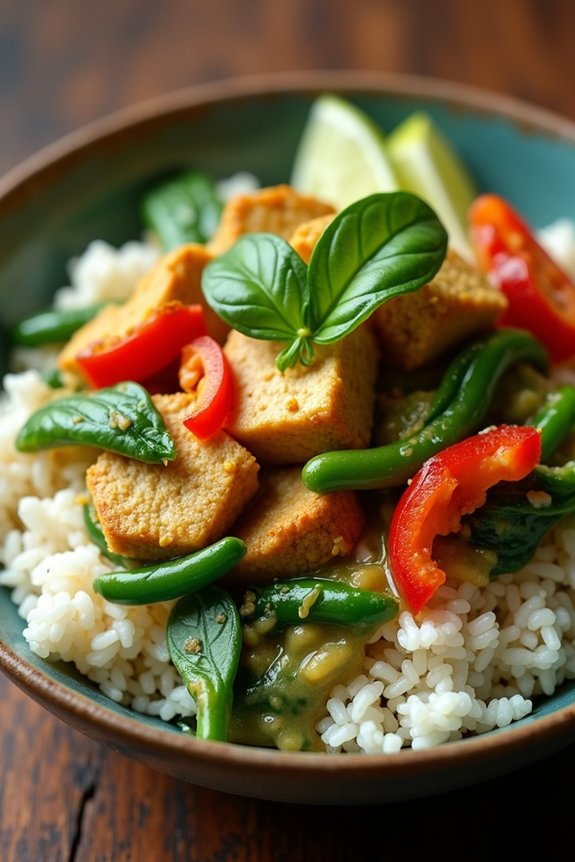
Thai Green Curry Rice Bowl is a delightful and aromatic dish that brings together the vibrant flavors of Thai cuisine in a comforting and satisfying way. This dish features tender pieces of chicken or tofu, fresh vegetables, and a rich green curry sauce, all served over a steaming bed of jasmine rice. The key to this dish is the fragrant blend of ingredients in the green curry paste, which infuses the dish with layers of spice, sweetness, and umami.
Perfect for a cozy dinner or a lunch that transports you to the streets of Thailand, this dish is both nourishing and easy to prepare. With its balance of colorful vegetables, creamy coconut milk, and the zesty punch of lime, Thai Green Curry Rice Bowl is a versatile recipe that can be adapted to suit different tastes and dietary preferences.
Whether you’re cooking for family or friends, this recipe serves 4-6 people and is sure to impress with its depth of flavor and beautiful presentation.
Ingredients (serves 4-6 people):
- 2 cups jasmine rice
- 2 tablespoons vegetable oil
- 1 pound chicken breast or tofu, cut into bite-sized pieces
- 1/4 cup green curry paste
- 1 can (14 ounces) coconut milk
- 1 cup chicken or vegetable broth
- 2 tablespoons fish sauce
- 2 tablespoons brown sugar
- 1 red bell pepper, sliced
- 1 cup green beans, trimmed
- 1 cup baby spinach
- 1/4 cup fresh Thai basil leaves
- 1 lime, cut into wedges
- Salt, to taste
- Optional garnish: sliced red chili, additional basil leaves
Cooking Instructions:
- Cook the Rice: Begin by rinsing the jasmine rice under cold water until the water runs clear. Cook the rice according to package instructions. Once cooked, fluff with a fork and set aside, keeping it warm.
- Prepare the Base: In a large pan or wok, heat the vegetable oil over medium heat. Add the chicken or tofu and cook until browned and cooked through, about 5-7 minutes. Remove from the pan and set aside.
- Make the Curry: In the same pan, add the green curry paste and stir-fry for about 1 minute until fragrant. Pour in the coconut milk and chicken or vegetable broth, stirring to combine with the curry paste.
- Season the Curry: Add fish sauce and brown sugar to the curry mixture. Stir well to dissolve the sugar and bring the mixture to a gentle simmer.
- Cook the Vegetables: Add the bell pepper and green beans to the pan, cooking for 3-4 minutes until they start to soften. Stir in the spinach and return the cooked chicken or tofu to the pan. Simmer for another 2-3 minutes until everything is heated through and the vegetables are tender.
- Finish and Serve: Taste the curry and adjust seasoning with salt if needed. Remove from heat, and stir in Thai basil leaves. Serve the curry over the cooked jasmine rice, garnishing with lime wedges, sliced red chili, and additional basil leaves if desired.
Extra Tips:
When cooking Thai Green Curry Rice Bowl, use fresh ingredients for the best flavor. If you prefer a spicier curry, add more green curry paste or include sliced fresh chili as a garnish.
For a vegetarian version, substitute fish sauce with soy sauce or a vegetarian alternative. Ultimately, try not to overcook the vegetables to maintain their crisp texture and vibrant color, enhancing both the visual appeal and nutritional value of your dish.
Japanese Teriyaki Chicken Rice Bowl

Japanese Teriyaki Chicken Rice Bowl is a delightful combination of the succulent flavors of teriyaki-glazed chicken served over a bed of fluffy white rice. Originating from Japan, this dish has become a favorite worldwide for its simplicity and delicious taste. The key to a perfect Teriyaki Chicken Rice Bowl lies in the balance of sweet and savory flavors in the teriyaki sauce, which beautifully coats the tender chicken pieces.
This dish is both satisfying and comforting, making it an ideal choice for a family meal or a quick weeknight dinner. The preparation of this dish involves marinating chicken in a homemade teriyaki sauce that enhances its flavor profile. Teriyaki sauce typically comprises soy sauce, mirin, sake, and sugar, creating a gloss and distinctive taste when cooked.
This recipe serves 4-6 people, making it perfect for a small gathering or family dinner. By following the step-by-step instructions, you’ll be able to recreate an authentic Japanese Teriyaki Chicken Rice Bowl in your own kitchen.
Ingredients:
- 2 pounds of boneless, skinless chicken thighs
- 1 cup soy sauce
- 1/2 cup mirin
- 1/4 cup sake
- 1/4 cup sugar
- 1 tablespoon grated ginger
- 1 tablespoon minced garlic
- 2 tablespoons vegetable oil
- 4 cups cooked white rice
- 2 tablespoons sesame seeds (optional)
- 2 green onions, sliced (optional)
Cooking Instructions:
- Prepare the Marinade: In a bowl, combine soy sauce, mirin, sake, sugar, grated ginger, and minced garlic. Mix well until the sugar has dissolved to form a smooth marinade.
- Marinate the Chicken: Place the chicken thighs in a resealable plastic bag or a shallow dish. Pour the marinade over the chicken, ensuring each piece is well-coated. Seal the bag or cover the dish and let it marinate in the refrigerator for at least 1 hour, or preferably overnight for deeper flavor.
- Cook the Rice: While the chicken is marinating, cook 4 cups of white rice according to the package instructions. Keep the rice warm until ready to serve.
- Cook the Chicken: Heat vegetable oil in a large skillet over medium-high heat. Remove the chicken from the marinade, shaking off excess, and reserve the marinade for later. Place the chicken in the skillet and cook for about 5-7 minutes on each side, or until cooked through and nicely browned.
- Make the Sauce: Pour the reserved marinade into the skillet with the cooked chicken. Bring it to a boil, then reduce heat to a simmer and let it cook until the sauce thickens and coats the chicken, about 5 minutes.
- Assemble the Rice Bowl: Divide the cooked rice among serving bowls. Top each bowl with slices of teriyaki chicken, drizzling any remaining sauce over the top. Garnish with sesame seeds and sliced green onions if desired.
Extra Tips: For an extra layer of flavor, you can add a splash of freshly squeezed lemon juice to the teriyaki sauce before serving. This adds a slight tanginess that complements the sweetness of the sauce.
Additionally, if you prefer a thicker sauce, you can dissolve a teaspoon of cornstarch in a little water and stir it into the sauce while it simmers. Adjust the sweetness of the teriyaki sauce to taste by adding more or less sugar depending on your preference.
Finally, consider adding steamed vegetables like broccoli or snap peas to the rice bowl for added color and nutrition.
Chinese Kung Pao Shrimp Rice Bowl
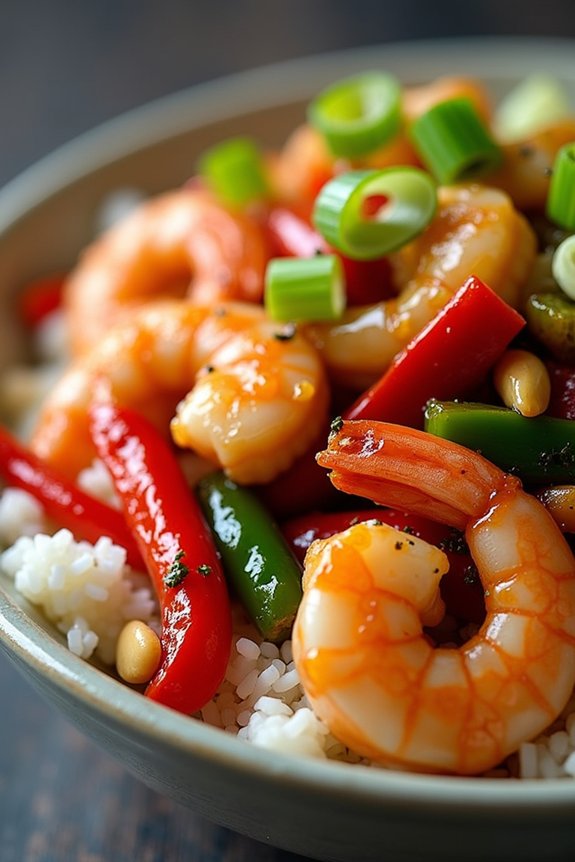
Kung Pao Shrimp is a classic Chinese dish that combines the flavors of spicy, sweet, and savory in every bite. This delicious rice bowl dish is perfect for a quick weeknight dinner or a special meal to impress your family and friends. The shrimp is cooked to perfection with crunchy peanuts, vibrant bell peppers, and a spicy sauce that ties the whole dish together. Served over a bed of fluffy rice, this Kung Pao Shrimp Rice Bowl is bound to become a staple in your dinner rotation.
The key to making a great Kung Pao Shrimp Rice Bowl is guaranteeing that all your ingredients are prepped and ready before you start cooking. The cooking process is quick, so having everything ready will make it much easier to keep up. This recipe serves 4-6 people, making it perfect for a family meal or for meal prep. If you love a bit of spice and a lot of flavor, this dish is for you!
Ingredients:
- 1 ½ pounds large shrimp, peeled and deveined
- 1 tablespoon cornstarch
- 2 tablespoons vegetable oil
- 1 red bell pepper, diced
- 1 green bell pepper, diced
- 3 cloves garlic, minced
- 1-inch piece of ginger, minced
- ½ cup unsalted roasted peanuts
- 4-6 cups cooked white rice
- ¼ cup soy sauce
- 2 tablespoons rice vinegar
- 1 tablespoon hoisin sauce
- 1 tablespoon sugar
- 1 tablespoon chili paste (adjust to taste)
- 1 teaspoon sesame oil
- 2 green onions, sliced
Cooking Instructions:
- Prepare the Shrimp: In a medium bowl, toss the shrimp with cornstarch until they’re evenly coated. This will help to give them a nice crispy texture when cooked.
- Make the Sauce: In a small bowl, mix together the soy sauce, rice vinegar, hoisin sauce, sugar, chili paste, and sesame oil. Set aside for later use.
- Cook the Shrimp: Heat 1 tablespoon of vegetable oil in a large skillet or wok over medium-high heat. Add the shrimp in a single layer and cook for about 2 minutes on each side until they’re pink and opaque. Remove the shrimp from the skillet and set aside.
- Stir-Fry the Vegetables: In the same skillet, add the remaining tablespoon of vegetable oil. Add the red and green bell peppers, garlic, and ginger. Stir-fry for about 3-4 minutes until the vegetables are tender-crisp.
- Combine Ingredients: Return the cooked shrimp to the skillet. Pour the prepared sauce over the shrimp and vegetables, and toss everything together to coat evenly. Add the peanuts and half of the sliced green onions, and stir to combine.
- Serve: Divide the cooked rice among serving bowls. Top each bowl with the Kung Pao shrimp and vegetable mixture. Garnish with the remaining green onions.
Extra Tips:
When making Kung Pao Shrimp Rice Bowl, it’s essential to use fresh, high-quality shrimp for the best flavor and texture. If you prefer more heat, feel free to adjust the amount of chili paste according to your taste.
Additionally, you can customize this dish by adding your favorite vegetables or substituting the shrimp with chicken or tofu for a different variation. Always keep an eye on the heat level to guarantee the sauce doesn’t burn, and enjoy your flavorful creation!
Vietnamese Lemongrass Beef Rice Bowl

Vietnamese Lemongrass Beef Rice Bowl is a flavorful and satisfying dish that combines aromatic lemongrass-marinated beef with fluffy rice and fresh vegetables.
This dish is a harmonious blend of textures and flavors, where the tender and juicy beef complements the crispness of the vegetables, all tied together with the fragrant scent of lemongrass. It’s a perfect meal for anyone looking to enjoy a taste of Vietnam in the comfort of their own home.
The key to this dish is the marinade, which infuses the beef with the vibrant flavors of lemongrass, garlic, and fish sauce.
Once cooked, the beef is served over a bed of rice and garnished with fresh herbs and vegetables, providing a revitalizing contrast to the savory meat. This recipe is designed to serve 4-6 people, making it ideal for family dinners or gatherings with friends.
Ingredients:
- 1.5 pounds of flank steak, thinly sliced
- 3 tablespoons lemongrass, minced
- 4 cloves garlic, minced
- 2 tablespoons fish sauce
- 1 tablespoon soy sauce
- 2 tablespoons sugar
- 1 tablespoon vegetable oil
- 1 teaspoon ground black pepper
- 3 cups jasmine rice
- 2 tablespoons vegetable oil (for cooking)
- 1 cucumber, thinly sliced
- 1 cup bean sprouts
- 1 cup fresh cilantro, chopped
- 1 cup fresh mint, chopped
- 1 lime, cut into wedges
Instructions:
1. Marinate the Beef: In a large bowl, combine the minced lemongrass, garlic, fish sauce, soy sauce, sugar, vegetable oil, and black pepper. Add the sliced beef to the marinade, ensuring each piece is well-coated.
Cover the bowl with plastic wrap and refrigerate for at least 1 hour, or overnight for more intense flavor.
2. Cook the Rice: While the beef marinates, rinse the jasmine rice under cold water until the water runs clear. Cook the rice according to the package instructions or in a rice cooker.
Once cooked, fluff the rice with a fork and keep warm.
3. Cook the Beef: Heat 2 tablespoons of vegetable oil in a large skillet over medium-high heat. Add the marinated beef in batches, ensuring not to overcrowd the pan.
Cook each batch for 3-4 minutes, stirring occasionally, until the beef is browned and cooked through. Remove from the skillet and set aside.
4. Prepare the Vegetables: Arrange the sliced cucumber, bean sprouts, chopped cilantro, and mint on a serving platter or individual bowls.
5. Assemble the Rice Bowls: Divide the cooked rice evenly among 4-6 bowls. Top each bowl with a portion of the cooked beef and arrange the fresh vegetables on the side.
Garnish with lime wedges for squeezing over the dish before serving.
Extra Tips: For extra flavor, consider adding a splash of sriracha or chili sauce for some heat. You can also substitute chicken or tofu for the beef if you prefer a different protein.
Make sure not to overcook the beef; it should be tender and juicy. If you find lemongrass difficult to find, you can use lemongrass paste as an alternative.
Indian Butter Chicken Rice Bowl

Indian Butter Chicken Rice Bowl is a delectable fusion dish that combines the rich flavors of traditional Indian butter chicken with the comforting base of rice, making it a perfect meal for any occasion. This dish offers a creamy, spicy, and savory flavor profile, with tender chunks of chicken smothered in a luscious tomato-based sauce, enriched with butter and cream.
The rice acts as the perfect vessel to soak up all the delicious flavors, creating a satisfying and hearty meal that’s sure to please your family or guests. The origins of butter chicken, also known as “Murgh Makhani,” lie in the Northern regions of India, where it was originally developed as a way to use up leftover tandoori chicken.
Today, it’s a beloved dish worldwide, celebrated for its creamy texture and robust flavors. When paired with fluffy basmati rice, it transforms into a comforting rice bowl that’s both filling and irresistible. Whether you’re new to cooking Indian cuisine or a seasoned chef, this recipe is sure to become a staple in your repertoire.
Ingredients for 4-6 Servings:
- 1.5 lbs (700g) boneless, skinless chicken thighs or breasts, cut into bite-sized pieces
- 1 cup plain yogurt
- 2 tablespoons lemon juice
- 2 teaspoons ground cumin
- 1-2 teaspoons chili powder
- 1 teaspoon ground turmeric
- 2 tablespoons vegetable oil
- 1 large onion, finely chopped
- 3 cloves garlic, minced
- 2 teaspoons ginger, grated
- 1 teaspoon garam masala
- 1 teaspoon ground coriander
- 1 cup tomato puree
- 1 cup heavy cream
- 4 tablespoons butter
- Salt to taste
- 3 cups cooked basmati rice
- Fresh cilantro, chopped (for garnish)
Cooking Instructions:
- Marinate the Chicken: In a large bowl, combine the yogurt, lemon juice, ground cumin, chili powder, and turmeric. Add the chicken pieces and toss to coat evenly. Cover the bowl and refrigerate for at least 1 hour, or overnight for best results.
- Cook the Chicken: Heat 1 tablespoon of vegetable oil in a large skillet over medium-high heat. Add the marinated chicken pieces, cooking them in batches if necessary to avoid overcrowding. Cook each piece until browned on all sides, about 5-7 minutes. Remove the chicken from the skillet and set aside.
- Prepare the Sauce: In the same skillet, add the remaining tablespoon of oil. Sauté the onions until they’re golden brown, about 5 minutes. Add garlic and ginger, cooking for an additional 1-2 minutes until fragrant.
- Spice the Sauce: Stir in the garam masala and ground coriander, allowing the spices to toast for about 1 minute. This step will enhance the flavor of your sauce.
- Tomato Base: Pour in the tomato puree, stirring well to combine. Let it simmer for about 10 minutes, allowing the sauce to thicken and deepen in color.
- Finish the Sauce: Reduce the heat to low and stir in the heavy cream and butter until fully incorporated. Simmer for another 5 minutes, ensuring the butter has melted and the sauce is creamy.
- Combine Chicken and Sauce: Add the cooked chicken back into the skillet, coating it well with the sauce. Allow the mixture to simmer gently for 10 minutes, ensuring the chicken is cooked through and tender.
- Assemble the Rice Bowl: Serve the butter chicken over a bed of warm, cooked basmati rice. Garnish with freshly chopped cilantro before serving.
Extra Tips:
For the richest flavor, allow the chicken to marinate overnight in the refrigerator. If you prefer a spicier dish, adjust the chili powder to your taste.
While cooking, always taste the sauce and adjust the seasoning as needed, bearing in mind that the flavors will continue to develop as the dish simmers. This dish pairs wonderfully with a side of naan bread or a fresh salad to balance the richness of the butter chicken.
Enjoy your Indian Butter Chicken Rice Bowl with a cool glass of lassi or a revitalizing cucumber raita on the side.
Malaysian Satay Chicken Rice Bowl

Malaysian Satay Chicken Rice Bowl is a delicious and aromatic dish that brings together the rich flavors of Southeast Asian cuisine. This dish combines marinated and grilled chicken satay, served over a bed of fragrant jasmine rice. The satay is typically skewered and cooked to perfection, offering a delightful combination of smoky, sweet, and savory flavors.
The rice bowl is often garnished with fresh vegetables and a drizzle of peanut sauce, creating a harmonious blend of textures and tastes. This recipe is perfect for serving 4-6 people, making it ideal for a family meal or a small gathering.
The preparation involves marinating the chicken pieces in a mixture of spices and ingredients that are commonly used in Malaysian cuisine, such as turmeric, coriander, and lemongrass. Once marinated, the chicken is grilled to achieve a tender and juicy texture, enhancing the overall flavor profile of the dish.
When served over rice and topped with crunchy vegetables and creamy peanut sauce, the Malaysian Satay Chicken Rice Bowl becomes a wholesome and satisfying meal.
Ingredients (Serves 4-6):
- 1.5 lbs (approximately 700g) boneless, skinless chicken thighs
- 1 cup coconut milk
- 2 tablespoons soy sauce
- 1 tablespoon brown sugar
- 2 teaspoons ground turmeric
- 2 teaspoons ground coriander
- 2 teaspoons ground cumin
- 2 stalks lemongrass, finely chopped
- 3 cloves garlic, minced
- 1 tablespoon fresh ginger, grated
- 1 tablespoon vegetable oil
- Salt and pepper, to taste
- 2 cups jasmine rice
- 1 cucumber, sliced
- 1 red bell pepper, thinly sliced
- 1 small bunch fresh cilantro, chopped
- 1 cup peanut sauce (store-bought or homemade)
Cooking Instructions:
- Prepare the Marinade: In a large bowl, combine the coconut milk, soy sauce, brown sugar, turmeric, coriander, cumin, lemongrass, garlic, ginger, and vegetable oil. Mix well until all the ingredients are fully incorporated.
- Marinate the Chicken: Cut the chicken thighs into bite-sized pieces and add them to the marinade. Stir to guarantee the chicken is well-coated. Cover the bowl and refrigerate for at least 2 hours, or overnight for best results.
- Cook the Rice: Rinse the jasmine rice under cold water until the water runs clear. In a medium saucepan, combine the rice with 4 cups of water. Bring to a boil, then reduce the heat to low and cover. Cook for 15 minutes or until the rice is tender and the water is absorbed. Remove from heat and let it sit, covered, for 5 minutes before fluffing with a fork.
- Grill the Chicken: Preheat a grill or grill pan over medium-high heat. Thread the marinated chicken pieces onto skewers. Grill the skewers for 5-7 minutes on each side or until the chicken is cooked through and has a nice char.
- Assemble the Rice Bowl: Divide the cooked rice among serving bowls. Top with grilled chicken skewers, sliced cucumber, red bell pepper, and a sprinkle of fresh cilantro. Drizzle peanut sauce over the top before serving.
- Serve and Enjoy: Serve the Malaysian Satay Chicken Rice Bowl warm, with extra peanut sauce on the side for dipping.
Extra Tips:
For an authentic and rich flavor, remember to marinate the chicken for at least a few hours; overnight marination yields the best results. If using wooden skewers, soak them in water for 30 minutes before threading the chicken to prevent them from burning on the grill.
You can adjust the spiciness of the peanut sauce by adding some chili paste or fresh chili slices to suit your taste. For a healthier twist, serve the rice bowl with brown rice or quinoa.
Indonesian Nasi Goreng Rice Bowl
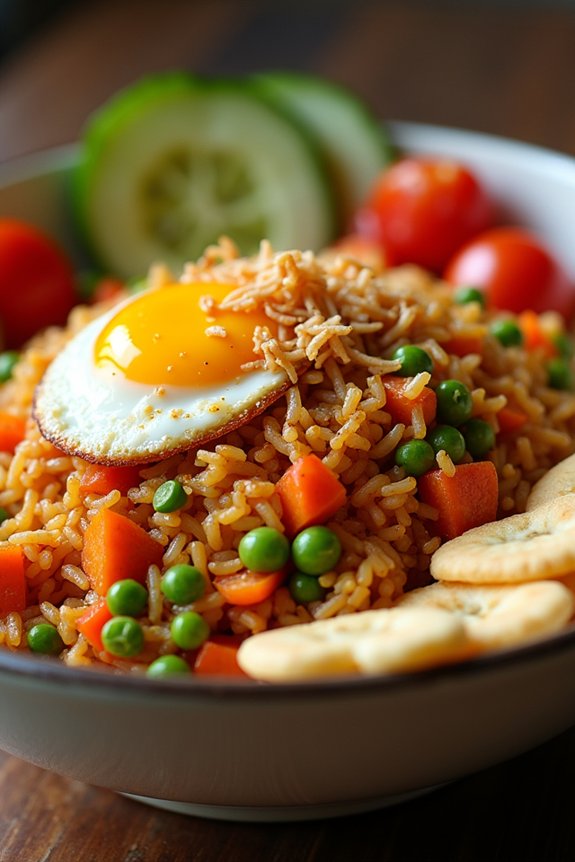
Indonesian Nasi Goreng Rice Bowl is a flavorful and aromatic dish that’s a staple in Indonesian cuisine. Known for its unique blend of spices and savory taste, Nasi Goreng translates to “fried rice” in Indonesian, and it’s a versatile dish that’s perfect for breakfast, lunch, or dinner.
Typically garnished with fried eggs, crispy shallots, and fresh vegetables, Nasi Goreng is a complete meal that offers a delightful balance of textures and flavors. This dish isn’t only popular in Indonesia but has also gained international acclaim for its simplicity and delicious taste.
The key to a good Nasi Goreng lies in the combination of sweet soy sauce (kecap manis), shrimp paste, and chili paste, which provide the dish with its rich and complex flavor profile. The base of the dish is day-old rice, which is used to achieve the perfect fried rice texture.
The rice is then stir-fried with an assortment of vegetables, proteins like shrimp or chicken, and seasoned with a variety of aromatic spices. To complete the meal, Nasi Goreng is often served with additional sides such as sliced cucumbers, tomatoes, prawn crackers, and a sunny-side-up egg.
Ingredients for 4-6 servings:
- 4 cups of day-old cooked jasmine rice
- 2 tablespoons vegetable oil
- 2 cloves garlic, minced
- 1 medium onion, finely chopped
- 2 tablespoons kecap manis (sweet soy sauce)
- 1 tablespoon shrimp paste
- 1 tablespoon chili paste (sambal oelek)
- 2 eggs, beaten
- 1 cup cooked shrimp or diced chicken
- 1 cup mixed vegetables (such as peas, carrots, and bell peppers)
- Salt and pepper, to taste
- 4-6 fried eggs (optional, for topping)
- Crispy shallots, for garnish
- Sliced cucumber and tomatoes, for serving
- Prawn crackers, for serving
Cooking Instructions:
- Prepare the Rice: Use day-old jasmine rice for the best texture. If using freshly cooked rice, spread it on a baking sheet and allow it to cool to room temperature to remove moisture.
- Cook the Aromatics: In a large wok or skillet, heat the vegetable oil over medium heat. Add the minced garlic and chopped onion, and sauté until the onion becomes translucent and fragrant.
- Add the Pastes: Stir in the shrimp paste and chili paste, cooking for about 1-2 minutes until well combined and the aroma is released.
- Cook the Eggs: Push the onion and garlic mixture to the side of the wok and pour in the beaten eggs. Allow them to set slightly, then scramble them until fully cooked.
- Introduce the Protein and Vegetables: Add the cooked shrimp or diced chicken along with the mixed vegetables to the wok. Stir-fry for about 3-4 minutes until the vegetables are tender.
- Fry the Rice: Add the day-old rice to the wok, breaking up any clumps with a spatula. Pour in the kecap manis and stir thoroughly to guarantee the rice is evenly coated with the sauce and heated through.
- Season the Dish: Taste and season with salt and pepper as desired. Stir-fry everything together for an additional 2-3 minutes.
- Serve and Garnish: Divide the Nasi Goreng into bowls. Top each serving with a fried egg and garnish with crispy shallots. Serve with sliced cucumber, tomatoes, and prawn crackers on the side.
Extra Tips:
To enhance the authenticity of your Nasi Goreng, try using traditional Indonesian condiments like sambal oelek for a spicy kick. If you don’t have day-old rice, cook your rice with slightly less water to guarantee it’s dry enough for frying.
Additionally, feel free to experiment with different proteins or make it vegetarian by omitting the shrimp paste and using tofu instead. Balancing the sweet, spicy, and savory elements is key to achieving a well-rounded flavor profile in this dish.
Filipino Adobo Pork Rice Bowl
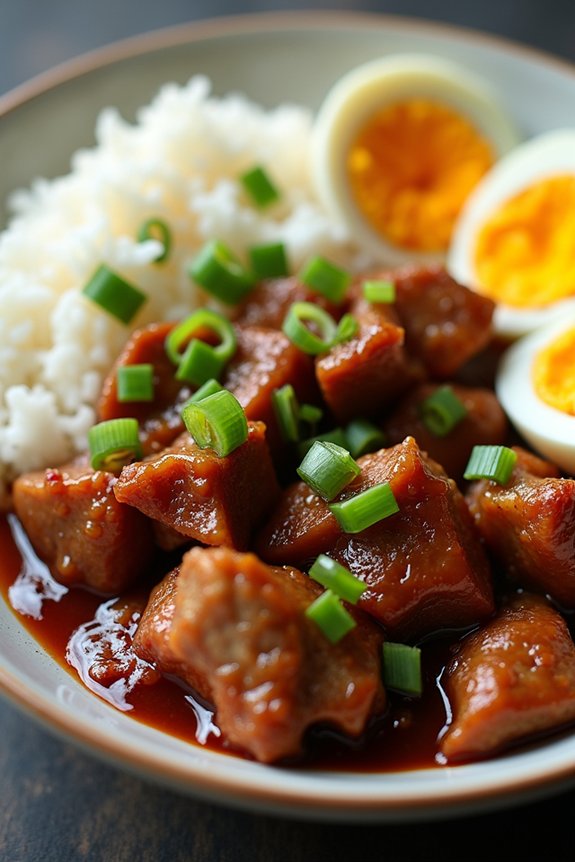
Filipino Adobo Pork Rice Bowl is a classic Filipino dish that combines tender, marinated pork with the savory, tangy flavors of soy sauce, vinegar, and garlic. This dish is a staple in Filipino cuisine and is known for its simple yet delicious taste. The pork is slow-cooked to perfection, allowing the flavors to meld together, creating a comforting and flavorful meal that’s perfect for any occasion.
Served over a bed of steamed rice, the pork adobo becomes a hearty and satisfying rice bowl that will surely be a hit with family and friends.
In this recipe, you’ll learn how to prepare a Filipino Adobo Pork Rice Bowl for a serving size of 4-6 people. The key to a great adobo is in the balance of flavors and the tenderness of the meat. By following these steps, you can recreate this beloved Filipino dish in your own kitchen, bringing a taste of the Philippines to your dining table.
Whether you’re a seasoned cook or a beginner, this recipe is straightforward and easy to follow, ensuring that you can enjoy the rich flavors of Filipino cuisine without any hassle.
Ingredients for 4-6 servings:
- 2 lbs pork shoulder or belly, cut into 1-inch cubes
- 1/2 cup soy sauce
- 1/2 cup vinegar (cane or white vinegar)
- 6 cloves garlic, crushed
- 1 large onion, sliced
- 2 bay leaves
- 1 teaspoon black peppercorns
- 1 tablespoon sugar
- 1 cup water
- 2 tablespoons cooking oil
- Cooked white rice, for serving
- Sliced green onions, for garnish (optional)
- Hard-boiled eggs, peeled and halved (optional)
Cooking Instructions:
1. Marinate the Pork:
In a large bowl, combine the pork cubes, soy sauce, vinegar, and crushed garlic. Mix well, ensuring the pork is evenly coated. Cover the bowl with plastic wrap and refrigerate for at least 1 hour, or overnight for better flavor absorption.
2. Sauté the Aromatics:
Heat the cooking oil in a large pot or Dutch oven over medium heat. Add the sliced onion and sauté until translucent. Add the marinated pork (reserve the marinade) and cook until the pork is browned on all sides.
3. Simmer the Adobo:
Pour the reserved marinade into the pot, along with the bay leaves, black peppercorns, sugar, and water. Bring the mixture to a boil, then reduce the heat to low. Cover and let it simmer for about 45 minutes to 1 hour, or until the pork is tender and the sauce has thickened.
4. Adjust Seasoning:
Taste the adobo and adjust the seasoning if needed. You can add more soy sauce or vinegar to achieve your desired taste. If the sauce is too thin, continue to simmer uncovered until it reaches the desired consistency.
5. Serve the Rice Bowl:
To serve, place a generous scoop of cooked white rice in each bowl. Top with a portion of the pork adobo and some of the sauce. Garnish with sliced green onions and halved hard-boiled eggs, if using.
Extra Tips:
For the best flavor, it’s recommended to marinate the pork overnight. This allows the meat to fully absorb the flavors of the soy sauce, vinegar, and garlic.
Additionally, using a combination of pork shoulder and belly can enhance the texture of the dish, providing a mix of lean and fatty pieces. If you prefer a sweeter adobo, feel free to add more sugar to the sauce.
Finally, for a spicier kick, you can include a few slices of chili peppers in the marinade or during the cooking process. Enjoy your flavorful and comforting Filipino Adobo Pork Rice Bowl!
Singaporean Chili Crab Rice Bowl

Singaporean Chili Crab Rice Bowl is a tantalizing dish that combines the bold flavors of Singapore’s iconic chili crab with the comforting essence of a rice bowl. This dish is perfect for those who love a mix of spicy, savory, and slightly sweet flavors, all coming together in a harmonious blend.
The chili crab sauce is the star of the show, made with a rich, spicy tomato base that’s enhanced with garlic, ginger, and a touch of sweetness. This sauce is then poured over perfectly cooked crab and served atop a bed of fluffy rice, making it a satisfying meal that’s both exotic and comforting.
To make this dish, you’ll start by preparing a flavorful chili crab sauce. The key to a great sauce lies in balancing the heat from the chili with the sweetness of the tomatoes and sugar, and the tanginess of the vinegar. Once the sauce is ready, it’s time to cook the crab, allowing it to absorb all those delicious flavors.
Finally, everything is assembled over rice, creating a delectable rice bowl that’s sure to impress your family or guests. This dish serves 4-6 people, making it ideal for a dinner party or a special family meal.
Ingredients:
- 2 whole crabs, cleaned and cut into pieces
- 4 cups cooked jasmine rice
- 2 tablespoons vegetable oil
- 6 cloves garlic, minced
- 3 tablespoons ginger, grated
- 2 red chilies, chopped
- 1/2 cup tomato ketchup
- 1/4 cup chili sauce
- 2 tablespoons soy sauce
- 2 tablespoons oyster sauce
- 2 tablespoons sugar
- 1 tablespoon vinegar
- 1/2 cup chicken broth
- 2 eggs, beaten
- 2 tablespoons cornstarch mixed with 3 tablespoons water
- 1 bunch of scallions, chopped
- Fresh cilantro, for garnish
Cooking Instructions:
- Prepare the Crab: Clean the crabs thoroughly, removing any unwanted parts, and cut them into manageable pieces. Set aside.
- Cook Aromatics: Heat vegetable oil in a large wok or pan over medium heat. Add minced garlic, grated ginger, and chopped red chilies. Sauté for about 2 minutes until fragrant.
- Make the Sauce: Add tomato ketchup, chili sauce, soy sauce, oyster sauce, sugar, and vinegar to the pan. Stir well to combine and cook for another 2 minutes.
- Simmer the Sauce: Pour in the chicken broth and bring the sauce to a simmer. Let it cook for about 5 minutes, allowing the flavors to meld together.
- Cook the Crab: Add the crab pieces to the simmering sauce. Cover the pan and let the crab cook in the sauce for 8-10 minutes, until cooked through and the flavors are absorbed.
- Thicken the Sauce: Stir the cornstarch mixture into the sauce and cook for another 2 minutes, until the sauce thickens. Stir in the beaten eggs, allowing them to cook through and create a silky texture.
- Assemble the Rice Bowl: Divide the cooked jasmine rice into bowls. Spoon generous amounts of the chili crab and sauce over the rice.
- Garnish and Serve: Top with chopped scallions and fresh cilantro. Serve immediately while hot.
Extra Tips:
When cooking the crab, be sure not to overcook it, as this can make the meat tough and chewy. The sauce should be well-balanced, so taste it as you go and adjust the seasoning to your preference.
If you prefer a milder dish, reduce the amount of chili or remove the seeds before chopping. Remember to have all your ingredients prepped and ready before you start cooking, as the process moves quickly once you begin.
Enjoy this vibrant and flavorful dish with a side of steamed vegetables or a light salad for a complete meal.
Taiwanese Braised Pork Rice Bowl
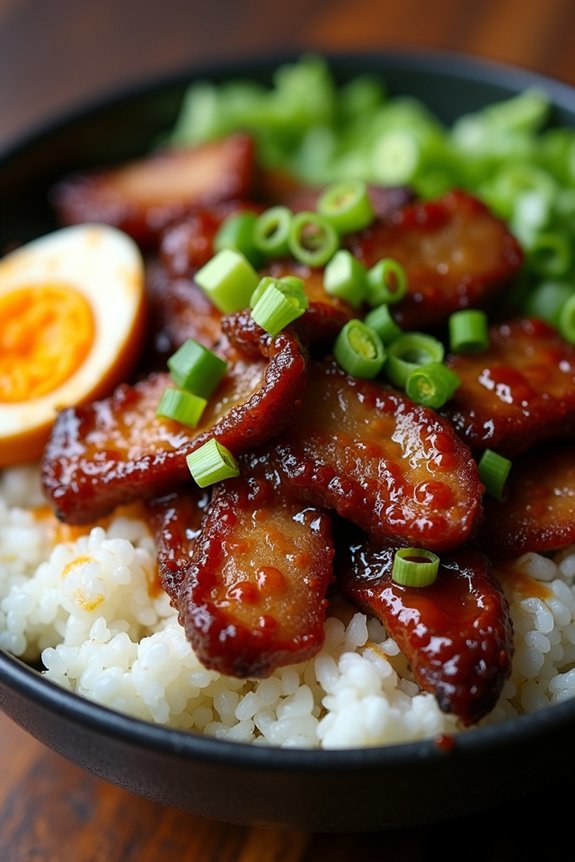
Taiwanese Braised Pork Rice Bowl, also known as Lu Rou Fan, is a classic comfort food that embodies the rich and savory flavors of Taiwanese cuisine. This dish features succulent pork belly that’s slowly braised in a flavorful soy sauce-based mixture, combined with aromatic spices and a hint of sweetness from rock sugar. The result is a tender, melt-in-your-mouth pork that’s served over a bed of steaming white rice, making it a hearty and satisfying meal. Perfect for a family dinner or a gathering with friends, this dish is sure to impress with its depth of flavor and comforting qualities.
The key to a successful Taiwanese Braised Pork Rice Bowl is in the slow braising process that allows the pork to soak up all the flavors from the sauce. The use of five-spice powder, along with star anise and cinnamon, gives the dish its authentic taste that’s both earthy and aromatic. The addition of hard-boiled eggs, which are simmered in the same sauce, adds an extra layer of texture and flavor to the dish. Whether you’re new to Taiwanese cuisine or a seasoned fan, this recipe is a delightful way to experience one of Taiwan’s most beloved dishes.
Ingredients for 4-6 servings:
- 2 pounds pork belly, cut into 1-inch cubes
- 3 tablespoons vegetable oil
- 1 large onion, chopped
- 5 cloves garlic, minced
- 1-inch piece of ginger, sliced
- 3 tablespoons soy sauce
- 2 tablespoons dark soy sauce
- 2 tablespoons rice wine or Shaoxing wine
- 1 tablespoon rock sugar or brown sugar
- 2 teaspoons five-spice powder
- 2 star anise
- 1 cinnamon stick
- 4 hard-boiled eggs, peeled
- 4 cups cooked white rice
- 2 cups water or chicken stock
- Chopped scallions for garnish
Cooking Instructions:
- Prepare the Pork: Start by cutting the pork belly into 1-inch cubes. This size guarantees that the pork cooks evenly and absorbs the flavors well.
- Sauté Aromatics: Heat the vegetable oil in a large pot or Dutch oven over medium heat. Add the chopped onion and sauté until translucent. Then, add the minced garlic and sliced ginger, cooking until fragrant.
- Brown the Pork: Add the pork belly cubes to the pot, stirring occasionally until all sides are browned. This process helps to seal in the flavors and give the pork a nice texture.
- Flavorful Sauce: Pour in the soy sauce, dark soy sauce, and rice wine. Stir to coat the pork evenly, then add the rock sugar, five-spice powder, star anise, and cinnamon stick. Mix well to combine all the ingredients.
- Simmer the Pork: Add the water or chicken stock, guaranteeing the liquid covers the pork. Bring the mixture to a boil, then reduce the heat to low. Cover the pot and let it simmer for 1.5 to 2 hours, or until the pork is tender.
- Add the Eggs: During the last 30 minutes of cooking, add the peeled hard-boiled eggs to the pot. Allow them to simmer in the sauce, absorbing the flavors.
- Serve: Once cooked, serve the braised pork and eggs over a bowl of steamed white rice. Garnish with chopped scallions for an added touch of revitalizing quality.
Extra Tips:
For an even richer flavor, try marinating the pork belly in the soy sauce mixture for at least 30 minutes before cooking. If preferred, you can substitute pork shoulder for pork belly for a leaner option.
Keep an eye on the sauce as it simmers; if it reduces too much, add a bit more water or stock to maintain the desired consistency. Adjust the level of sweetness and saltiness according to your taste by modifying the amount of rock sugar and soy sauce. Enjoy this dish with a side of pickled vegetables for a rejuvenating contrast.
Cambodian Amok Fish Rice Bowl
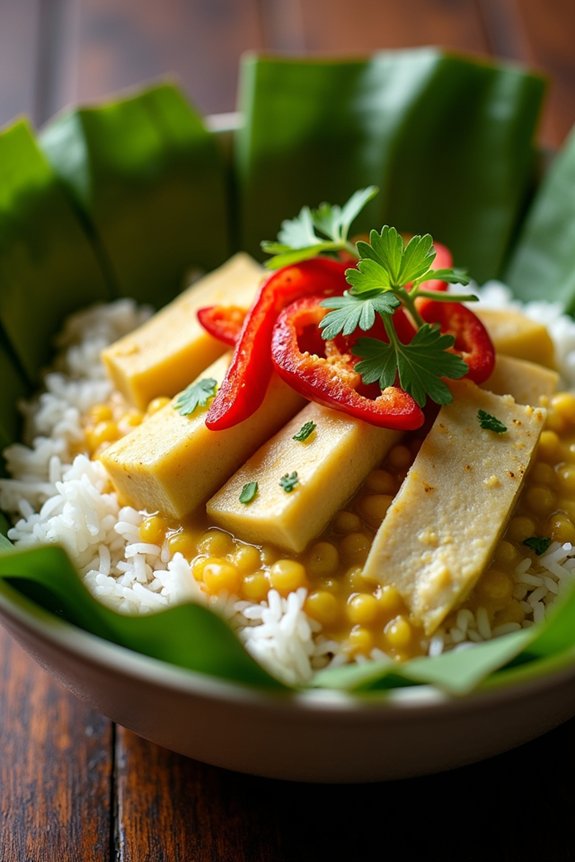
Cambodian Amok Fish is a traditional and beloved dish that offers a delightful blend of flavors and aromas. It combines tender fish with a rich, coconut-based curry, traditionally steamed in banana leaves for an authentic experience. The dish is renowned for its delicate balance of spice and sweetness, with the earthy undertones of lemongrass and kaffir lime leaves enhancing the creamy texture of the coconut milk.
When served over a bowl of steamed rice, Cambodian Amok Fish becomes a hearty and satisfying meal that transports you straight to the vibrant streets of Cambodia.
This recipe for Cambodian Amok Fish Rice Bowl is perfect for serving 4-6 people. Preparing this dish involves creating a fragrant curry paste, marinating the fish, and gently cooking the ingredients to achieve a harmonious blend of flavors. The use of fresh herbs and spices, combined with the smoothness of coconut milk, results in a dish that’s both comforting and exotic.
Whether you’re familiar with Southeast Asian cuisine or trying it for the first time, this recipe provides a delightful new culinary experience.
Ingredients (serving size: 4-6 people):
- 2 pounds white fish fillets (such as tilapia, cod, or catfish)
- 1 cup coconut milk
- 2 tablespoons fish sauce
- 2 tablespoons palm sugar (or brown sugar)
- 1 large egg
- 2 tablespoons vegetable oil
- 4-6 banana leaves (or aluminum foil)
- 1 cup steamed jasmine rice (per serving)
- 1-2 red chili peppers, sliced (optional, for garnish)
- Fresh cilantro leaves (optional, for garnish)
Curry Paste Ingredients:
- 3 lemongrass stalks (white part only), finely chopped
- 4 cloves garlic
- 3 shallots
- 2 kaffir lime leaves, finely chopped
- 1 teaspoon turmeric powder
- 1 tablespoon galangal, finely chopped (or ginger as a substitute)
- 1 teaspoon shrimp paste
- 1 tablespoon fish sauce
Cooking Instructions:
- Prepare the Curry Paste: In a food processor or mortar and pestle, combine lemongrass, garlic, shallots, kaffir lime leaves, turmeric, galangal, shrimp paste, and fish sauce. Blend or pound until a smooth paste forms. Set aside.
- Marinate the Fish: Cut the fish fillets into bite-sized pieces. In a mixing bowl, combine the fish pieces with half of the prepared curry paste. Mix well and let it marinate for at least 20 minutes to absorb the flavors.
- Prepare the Coconut Mixture: In another bowl, whisk together coconut milk, remaining curry paste, fish sauce, palm sugar, and egg until well combined. This will form the base of the Amok sauce.
- Assemble the Amok Parcels: Cut the banana leaves into squares (about 10×10 inches) and soften them by holding over a flame or dipping briefly in hot water. Place a banana leaf square on a flat surface, add a few pieces of marinated fish, and spoon over some coconut mixture. Fold the banana leaf to form a parcel, securing with toothpicks. Repeat for all fish pieces.
- Cook the Amok: Steam the banana leaf parcels in a steamer over boiling water for about 20-25 minutes, or until the fish is cooked through and the sauce has thickened.
- Serve: Carefully open the banana parcels and serve the steamed Amok fish over bowls of steamed jasmine rice. Garnish with sliced red chili and fresh cilantro leaves if desired.
Extra Tips:
When working with banana leaves, make sure they’re pliable to avoid tearing. If banana leaves aren’t available, aluminum foil can be used as an alternative.
Adjust the spice level by adding more or fewer chili peppers according to your preference. For a more authentic presentation, consider serving the dish in small bowls made from banana leaves.
Always taste the curry mixture before steaming to guarantee the balance of flavors suits your palate—adjusting the fish sauce, sugar, or spice levels as needed.
Enjoy your homemade Cambodian Amok Fish Rice Bowl with a side of pickled vegetables for an extra burst of flavor.
Mongolian Beef Rice Bowl

Mongolian Beef Rice Bowl is a delicious fusion dish that brings the flavors of Mongolia to your dining table in a comforting and satisfying manner. This dish is characterized by its tender strips of beef coated in a savory, sweet, and slightly spicy sauce, served atop a bed of fluffy rice. The combination of soy sauce, ginger, and garlic creates a rich and aromatic sauce that perfectly complements the beef, while the rice serves as a hearty base that ties the dish together.
Perfect for a family dinner or a gathering with friends, this recipe is sure to impress with its bold flavors and enticing aroma.
The preparation of Mongolian Beef Rice Bowl involves marinating the beef to guarantee it’s tender and flavorful, followed by a quick stir-fry to lock in the juices. The sauce, made with a blend of soy sauce, brown sugar, and spices, provides a delectable glaze that coats the beef just right. Whether you’re a seasoned cook or a beginner in the kitchen, this recipe is simple to follow and can be prepared in under an hour.
Serve it up with steamed broccoli or your favorite vegetables for a complete meal that’s both nutritious and indulgent.
Ingredients (serves 4-6 people):
- 1 ½ pounds flank steak, thinly sliced
- ½ cup soy sauce
- ½ cup brown sugar
- ¼ cup cornstarch
- 2 tablespoons vegetable oil
- 4 cloves garlic, minced
- 1 tablespoon fresh ginger, grated
- 1 cup beef broth
- 1 teaspoon red pepper flakes (optional)
- 4 green onions, sliced
- 3 cups cooked jasmine rice
- 2 tablespoons sesame seeds (optional)
Cooking Instructions:
- Prepare the Beef: In a large bowl, toss the thinly sliced flank steak with cornstarch until evenly coated. Let it sit for about 10 minutes to allow the cornstarch to adhere to the beef, which will help in creating a crispy texture when cooked.
- Make the Sauce: In a small bowl, mix soy sauce, brown sugar, beef broth, minced garlic, grated ginger, and red pepper flakes (if using) until the sugar is dissolved. Set aside.
- Cook the Beef: Heat the vegetable oil in a large skillet or wok over medium-high heat. Add the beef strips in a single layer, cooking until browned on both sides, about 2-3 minutes per side. You may need to do this in batches to avoid overcrowding the pan. Remove the beef and set aside.
- Combine and Simmer: In the same skillet, pour in the prepared sauce and bring it to a simmer. Allow it to cook for 2-3 minutes until it starts to thicken. Return the beef to the skillet and toss to coat evenly with the sauce. Cook for another 2 minutes to guarantee everything is well combined.
- Final Touches: Add the sliced green onions to the beef and sauce, stirring to combine. Serve the beef mixture over a bed of cooked jasmine rice, and sprinkle with sesame seeds if desired.
Extra Tips:
To guarantee the beef remains tender, avoid overcooking it during the stir-fry process. Thinly slicing the beef against the grain is vital for achieving that melt-in-your-mouth texture.
If you prefer a spicier dish, feel free to increase the amount of red pepper flakes or add a splash of sriracha to the sauce. Additionally, for a more vegetable-rich meal, consider adding sliced bell peppers or steamed broccoli into the mix just before serving.
This dish is highly customizable, so feel free to adjust the sweetness or saltiness according to your preference. Enjoy your homemade Mongolian Beef Rice Bowl!
