


If you’re like me and adore the comforting flavors of Korean cuisine, you won’t want to miss these delightful rice cake recipes. Each dish, from the spicy tteokbokki to the sweet hobak tteok, brings warmth to both your body and soul. The chewy texture and rich flavors make them perfect for any occasion. These cozy creations might just become your new favorites. Ready to explore these irresistible recipes?
Tteokbokki: Spicy Stir-Fried Rice Cakes
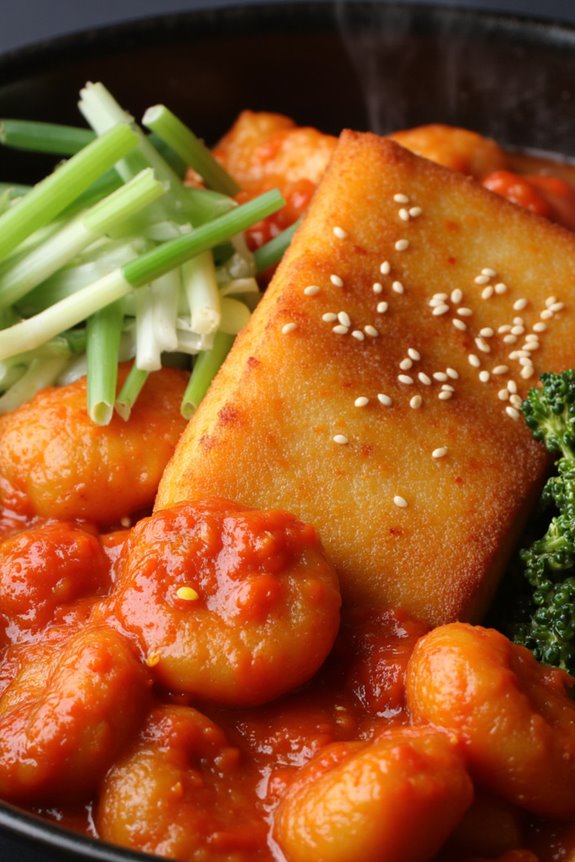
Tteokbokki, also known as spicy stir-fried rice cakes, is a popular Korean street food that has gained international recognition for its bold flavors and satisfying texture. This dish combines chewy rice cakes with a spicy, sweet, and savory sauce made from gochujang (Korean chili paste) and other flavorful ingredients.
Tteokbokki is often enjoyed as a snack or light meal and is perfect for those who love a bit of heat in their food. It can be customized with various add-ins like fish cakes, boiled eggs, or vegetables, making it a versatile dish that can be tailored to your taste preferences.
The key to a great tteokbokki lies in its balance of flavors and the texture of the rice cakes. The rice cakes should be soft yet chewy, absorbing the rich sauce they’re cooked in. This recipe will guide you through the process of making tteokbokki for 4-6 people, guaranteeing you have a delicious and satisfying dish to share with family and friends.
Whether you’re a seasoned cook or new to Korean cuisine, this recipe will help you recreate a traditional favorite in the comfort of your own kitchen.
Ingredients (Serving Size: 4-6)
- 1 pound of Korean rice cakes (tteok)
- 1/3 cup gochujang (Korean chili paste)
- 2 tablespoons gochugaru (Korean chili flakes)
- 3 tablespoons soy sauce
- 2 tablespoons sugar
- 4 cups water or anchovy broth
- 1 tablespoon minced garlic
- 2 green onions, chopped
- 1/2 pound fish cakes, sliced
- 2 hard-boiled eggs, peeled (optional)
- 1 tablespoon sesame oil
- Sesame seeds for garnish
Instructions
- Prepare the Rice Cakes: If using refrigerated or frozen rice cakes, soak them in warm water for about 20-30 minutes until they soften. Fresh rice cakes can be used directly.
- Make the Sauce: In a medium bowl, mix together the gochujang, gochugaru, soy sauce, sugar, and minced garlic. Stir until well combined. This will serve as the base for your sauce.
- Cook the Rice Cakes: In a large pan or wok, bring 4 cups of water or anchovy broth to a boil. Add the sauce mixture and stir well to incorporate. Add the rice cakes and fish cakes to the pan. Allow them to cook for about 10-15 minutes, stirring occasionally, until the rice cakes become soft and the sauce thickens.
- Add Final Ingredients: Once the rice cakes are cooked and the sauce has thickened, add the chopped green onions and sesame oil. Stir well to combine. If using, add the hard-boiled eggs at this stage.
- Serve: Transfer the tteokbokki to a serving dish and sprinkle with sesame seeds for garnish. Serve hot and enjoy!
Extra Tips
For the best texture, make sure your rice cakes are fully softened before cooking, as this will guarantee they absorb the flavors of the sauce effectively.
If you prefer a milder version, adjust the amount of gochugaru and gochujang to your taste. To make the dish more substantial, consider adding vegetables such as cabbage, carrots, or mushrooms.
Additionally, continuously stirring the mixture while cooking helps prevent the rice cakes from sticking to the pan and guarantees even distribution of the sauce.
Gungjung Tteokbokki: Royal Court Rice Cakes

Gungjung Tteokbokki, also known as Royal Court Rice Cakes, is a beloved Korean dish that dates back to the Joseon Dynasty. Unlike the spicy version of tteokbokki commonly found in street food stalls, Gungjung Tteokbokki offers a more subtle and savory flavor profile. This dish features chewy rice cakes stir-fried with a variety of vegetables and beef, all seasoned with a soy sauce-based marinade. The name “Royal Court” reflects its luxurious ingredients and flavors, which were once reserved for Korean royalty. Today, it’s enjoyed by many for its rich taste and satisfying texture.
Preparing Gungjung Tteokbokki is a delightful experience that brings to life the perfect balance of flavors. The dish is a harmonious blend of the chewiness of the rice cakes, the tender slices of marinated beef, and the crispness of fresh vegetables such as mushrooms, carrots, and bell peppers. The soy sauce, sesame oil, and garlic used in the marinade create a savory and slightly sweet glaze that envelops each ingredient, enhancing the overall taste. This dish is perfect for a family meal or a special occasion, offering a taste of history with every bite.
Ingredients (Serves 4-6):
- 1 lb (450g) cylindrical rice cakes
- 1/2 lb (225g) beef, thinly sliced
- 1 medium onion, thinly sliced
- 1 medium carrot, julienned
- 1 red bell pepper, thinly sliced
- 1/2 cup (75g) shiitake mushrooms, sliced
- 2 tablespoons vegetable oil
- 3 tablespoons soy sauce
- 1 tablespoon sugar
- 1 tablespoon sesame oil
- 2 cloves garlic, minced
- 1 tablespoon toasted sesame seeds
- 2 green onions, chopped
- Salt and pepper to taste
Cooking Instructions:
- Prepare the Rice Cakes: Soak the rice cakes in warm water for about 10-15 minutes to soften them. Drain and set aside. This step guarantees the rice cakes have a tender and chewy texture.
- Marinate the Beef: In a bowl, combine the thinly sliced beef with 1 tablespoon of soy sauce, 1 tablespoon of sugar, and half of the minced garlic. Mix well and let it marinate for at least 15 minutes. This allows the beef to absorb the flavors, making it tender and flavorful.
- Cook the Beef: Heat 1 tablespoon of vegetable oil in a large pan over medium heat. Add the marinated beef and cook until it’s browned and cooked through, about 3-4 minutes. Remove the beef from the pan and set aside.
- Sauté the Vegetables: In the same pan, add the remaining vegetable oil. Add the onion, carrots, bell pepper, and shiitake mushrooms. Stir-fry the vegetables until they’re tender but still crisp, about 5 minutes.
- Combine Ingredients: Return the beef to the pan with the vegetables. Add the drained rice cakes, remaining soy sauce, sesame oil, and the rest of the minced garlic. Stir well to combine all the ingredients.
- Cook the Rice Cakes: Continue to stir-fry the mixture over medium heat for another 5-7 minutes, until the rice cakes are fully cooked and coated with the sauce. Season with salt and pepper to taste.
- Finish and Garnish: Once everything is well combined and heated through, sprinkle with toasted sesame seeds and chopped green onions. Serve hot.
Extra Tips:
For the best texture, make sure that the rice cakes aren’t over-soaked, as they can become too soft and lose their chewiness. If you can’t find cylindrical rice cakes, sliced rice cakes can be used as a substitute. Additionally, adjust the amount of soy sauce and sugar to taste, depending on how salty or sweet you prefer the dish. To add an extra layer of flavor, you can include a splash of mirin or rice wine during the cooking process. Enjoy your Gungjung Tteokbokki with a side of kimchi for a complete Korean culinary experience.
Tteokguk: Rice Cake Soup

Tteokguk is a traditional Korean dish enjoyed especially during the Lunar New Year celebration. This comforting soup is made with thinly sliced rice cakes simmered in a savory broth, typically garnished with egg, seaweed, and green onions. The dish symbolizes the gaining of a year in age and is considered a must-have for starting a new year with good fortune and health.
The delightful combination of soft rice cakes and flavorful broth makes it a cherished comfort food, perfect for warming up on a chilly day.
Preparing Tteokguk is a simple yet rewarding process, bringing together a few key ingredients to create a harmonious flavor profile. The rice cakes, known as “tteok,” are the star of the dish, providing a chewy texture that complements the savory broth. While beef is commonly used to make the broth, you can also use anchovy or vegetable stock for a lighter version.
This dish serves 4-6 people, making it ideal for sharing with family and friends during festive occasions or any day you crave a taste of Korea.
Ingredients for 4-6 servings:
- 1 pound (450g) of Korean rice cakes (tteok)
- 8 cups of water
- 1/2 pound (225g) beef brisket, thinly sliced
- 3 cloves garlic, minced
- 2 tablespoons soy sauce
- 1 tablespoon sesame oil
- Salt and pepper to taste
- 2 eggs
- 2 green onions, chopped
- 1 sheet dried laver (seaweed), toasted and shredded
- Optional garnish: sesame seeds
Cooking Instructions:
- Prepare the Rice Cakes: Soak the rice cakes in cold water for about 30 minutes to soften them. This step helps guarantee they cook evenly in the soup and achieve a tender texture.
- Make the Broth: In a large pot, combine the water, beef brisket, and minced garlic. Bring the mixture to a boil over medium-high heat. Once boiling, reduce the heat to a simmer and cook for about 30 minutes. Skim off any foam or impurities that rise to the surface to keep the broth clear.
- Season the Broth: Add soy sauce, sesame oil, salt, and pepper to the pot. Taste and adjust the seasoning as needed to achieve a balanced, savory flavor.
- Cook the Rice Cakes: Drain the soaked rice cakes and add them to the simmering broth. Cook for about 5-7 minutes, or until the rice cakes become tender and slightly translucent.
- Prepare the Egg Garnish: Beat the eggs in a small bowl. In a separate non-stick pan over medium heat, pour in the beaten eggs to create a thin omelet. Once set, roll the omelet and slice it into thin strips for garnish.
- Assemble the Soup: Ladle the soup into bowls, ensuring each portion has a generous amount of rice cakes and beef. Top with egg strips, chopped green onions, shredded seaweed, and a sprinkle of sesame seeds if desired.
Extra Tips:
For the best results, use fresh rice cakes if possible, as they’ll yield a softer texture. If using frozen rice cakes, allow extra soaking time to guarantee they’re adequately softened.
Adjust the broth’s saltiness according to your preference, especially if you’re using a different protein or stock base. Additionally, feel free to add other vegetables like mushrooms or cabbage for extra flavor and nutrition.
Tteokguk is versatile, so customize it to suit your taste while maintaining its traditional essence.
Hobak Tteok: Steamed Pumpkin Rice Cakes
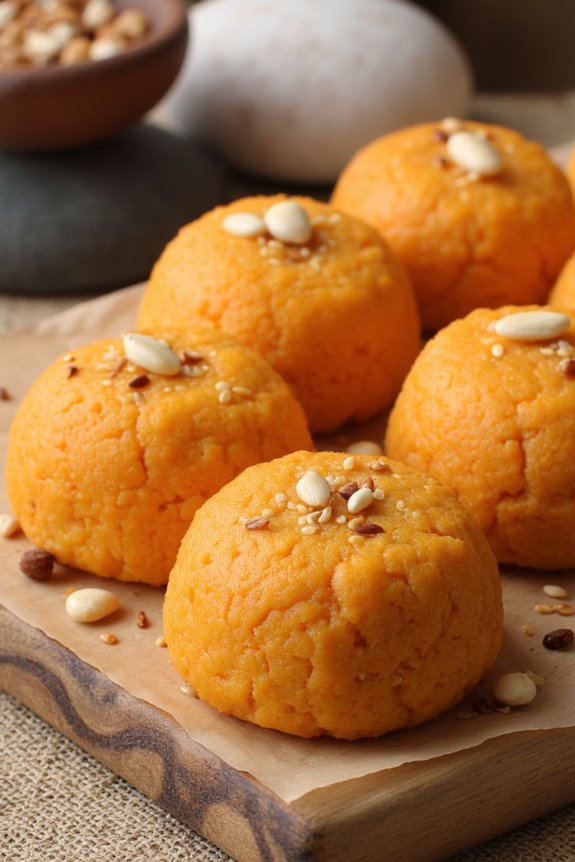
Hobak Tteok, also known as Steamed Pumpkin Rice Cakes, is a delightful Korean dessert that combines the natural sweetness of pumpkin with the chewy texture of rice cake. This traditional treat isn’t only a feast for the taste buds but also a visually appealing dish, often featuring vibrant orange hues from the pumpkin.
The subtle sweetness and earthy flavor of the pumpkin harmonize beautifully with the soft, chewy rice cake, making it a perfect snack or dessert for any occasion.
The preparation of Hobak Tteok involves steaming the rice cakes to achieve the perfect texture. The use of glutinous rice flour guarantees that the cakes have a satisfyingly chewy consistency, while the pumpkin adds moisture and flavor. This recipe is designed for a serving size of 4-6 people, making it ideal for sharing with family and friends.
Whether you’re new to Korean cuisine or a seasoned enthusiast, Hobak Tteok is a dish that will surely impress with its simplicity and delicious taste.
Ingredients for Hobak Tteok (Serves 4-6)
- 2 cups glutinous rice flour
- 1 cup pumpkin puree (freshly steamed or canned)
- 1/2 cup sugar
- 1/2 teaspoon salt
- 1/2 cup water
- 1 tablespoon vegetable oil
- 1/4 cup roasted sesame seeds (optional)
- 1/4 cup pine nuts (optional)
Cooking Instructions
- Prepare the Steamer: Fill a large steamer with water and bring it to a boil over medium-high heat. Line the steamer basket with a clean muslin cloth or parchment paper to prevent sticking.
- Mix the Ingredients: In a large mixing bowl, combine the glutinous rice flour, pumpkin puree, sugar, and salt. Gradually add water, a little at a time, mixing thoroughly to form a smooth, sticky dough. The consistency should be thick yet pourable.
- Oil the Molds: Lightly grease your desired cake molds or ramekins with vegetable oil. This will guarantee easy removal of the rice cakes after steaming.
- Pour the Batter: Pour the pumpkin rice cake batter into the prepared molds, filling them about three-quarters full. Smooth the surface with a wet spatula to ensure even cooking.
- Steam the Rice Cakes: Place the filled molds into the steamer basket. Cover and steam for 30-40 minutes or until the rice cakes are set and cooked through. You can test for doneness by inserting a toothpick into the center of a cake; it should come out clean.
- Cool and Serve: Once steamed, remove the rice cakes from the steamer and let them cool slightly before unmolding. Garnish with roasted sesame seeds and pine nuts if desired, and serve warm or at room temperature.
Extra Tips
When making Hobak Tteok, be mindful of the amount of water added to the dough. Too much water can result in overly sticky rice cakes, while too little can make them dry and crumbly.
Adjust the water based on the moisture content of your pumpkin puree. If you’re using fresh pumpkin, steaming it until very soft and thoroughly draining any excess water will help achieve the right consistency.
Additionally, feel free to experiment with different toppings or mix-ins, such as red beans or dried fruit, to add variety and texture to your rice cakes.
Yaksik: Sweet Rice Cake With Nuts and Jujubes

Yaksik, also known as sweet rice cake with nuts and jujubes, is a traditional Korean dessert that’s both delicious and rich in history. Often served during special occasions and celebrations, Yaksik is made with glutinous rice, honey, nuts, and dried fruits, creating a harmonious blend of flavors and textures.
The dish isn’t only favored for its taste but also for its nutritional benefits, as it’s packed with healthy ingredients such as chestnuts, pine nuts, and jujubes (Korean dates). This recipe will guide you through the process of making authentic Yaksik that will delight your family and guests alike.
The preparation of Yaksik involves steaming the glutinous rice and then mixing it with a sweet, aromatic sauce made from soy sauce, honey, and brown sugar. The rice is then combined with a medley of nuts and jujube slices, which add a delightful crunch and natural sweetness to the dish.
Traditionally, Yaksik is wrapped in cloth and steamed again to allow the flavors to meld together, resulting in a soft and chewy texture. This recipe is designed to serve 4-6 people, perfect for a family gathering or a special treat for yourself and friends.
Ingredients (Serves 4-6):
- 2 cups glutinous rice
- 1/4 cup soy sauce
- 1/2 cup honey
- 1/4 cup brown sugar
- 1/2 cup chestnuts, peeled and chopped
- 1/4 cup pine nuts
- 10 jujubes, pitted and sliced
- 1 tablespoon sesame oil
- 1/2 teaspoon cinnamon powder
- 1 tablespoon vegetable oil
Cooking Instructions:
- Prepare the Rice: Rinse the glutinous rice under cold water until the water runs clear. Soak the rice in water for at least 3 hours, or overnight for best results. Drain the rice well before cooking.
- Steam the Rice: Set up a steamer and line it with a damp cheesecloth. Spread the soaked rice evenly on the cloth and steam over medium heat for about 40 minutes, or until the rice is fully cooked and tender.
- Make the Sauce: In a small saucepan, combine soy sauce, honey, brown sugar, sesame oil, and cinnamon powder. Heat the mixture over low heat, stirring until the sugar has dissolved completely. Remove from heat and set aside.
- Mix the Ingredients: In a large mixing bowl, combine the steamed rice with the prepared sauce, stirring gently to guarantee even coating. Add the chestnuts, pine nuts, and jujube slices, and mix thoroughly.
- Final Steaming: Grease a heatproof dish or mold with vegetable oil. Transfer the rice mixture into the dish, pressing it down gently to compact it. Cover the dish with aluminum foil or a tight-fitting lid. Place it back in the steamer and steam for another 30 minutes to allow the flavors to meld together.
- Serve: Once done, remove the dish from the steamer and let it cool slightly. Slice the Yaksik into squares or diamond shapes and serve warm or at room temperature.
Extra Tips:
When making Yaksik, verify that the glutinous rice is thoroughly soaked, as this will help achieve the desired soft and chewy texture.
Adjust the sweetness of the dish to your preference by modifying the amount of honey and brown sugar. Be careful not to overcook the rice, as it may become too sticky.
For a more decorative presentation, consider using a mold with patterns or shapes to give your Yaksik a festive appearance. Finally, feel free to experiment with different nuts or dried fruits to suit your taste, keeping the core essence of Yaksik intact.
Injeolmi: Sweet Rice Cake With Roasted Soybean Powder

Injeolmi is a delightful Korean treat that’s beloved for its chewy texture and subtle sweetness. Made from sweet rice flour, this rice cake is coated with a nutty roasted soybean powder, which adds a deliciously earthy flavor. Traditionally, Injeolmi is enjoyed during special occasions and celebrations, but it can also be a wonderful snack to enjoy with tea or coffee.
The process of making Injeolmi is quite simple, and with a few ingredients, you can recreate this timeless Korean dessert in your own kitchen. To make Injeolmi, you begin by steaming sweet rice flour to create a sticky dough. Once the dough is prepared, it’s shaped into bite-sized pieces and generously coated with roasted soybean powder. This coating not only prevents the rice cake from sticking but also enhances its flavor and texture.
The combination of the soft, chewy rice cake with the aromatic soybean powder makes Injeolmi a treat that’s hard to resist. Whether you’re new to Korean cuisine or a seasoned enthusiast, this recipe is sure to become one of your favorites.
Ingredients (Serves 4-6)
- 2 cups sweet rice flour (also known as glutinous rice flour)
- 1 cup water
- 1/4 teaspoon salt
- 1/2 cup roasted soybean powder (kinako)
- 2 tablespoons sugar
- Vegetable oil, for greasing
Cooking Instructions
- Prepare the Steamer: Fill a pot with water and bring it to a boil. Place a steaming basket or tray over the pot. Lightly grease the steamer surface with vegetable oil to prevent sticking.
- Mix the Batter: In a mixing bowl, combine the sweet rice flour, water, and salt. Stir until you achieve a smooth batter with no lumps.
- Steam the Batter: Pour the batter into a heatproof dish that fits inside the steamer. Place the dish in the steamer and cover with a lid. Steam for about 20-25 minutes, or until the dough becomes translucent and sticky.
- Prepare the Coating: While the dough is steaming, mix the roasted soybean powder and sugar together in a shallow dish.
- Shape the Rice Cake: Once the dough is steamed, let it cool slightly. Grease your hands with a little vegetable oil to prevent sticking. Take small portions of the dough and roll them into balls or flatten them into small discs, whichever shape you prefer.
- Coat the Rice Cake: Roll each piece of rice cake in the soybean powder mixture until fully coated. Make sure each piece is evenly covered to enhance flavor and prevent sticking.
- Serve: Arrange the coated rice cakes on a serving plate. Injeolmi is best enjoyed fresh, but it can be stored in an airtight container for a day or two.
Extra Tips
When making Injeolmi, it’s important to work quickly while the dough is still warm, as it can harden as it cools, making it more difficult to shape. If the dough becomes too sticky to handle, lightly oil your hands again.
Additionally, you can experiment with different coatings such as ground sesame seeds or cocoa powder for a unique twist. Remember, Injeolmi is best consumed fresh as it can lose its softness over time. Enjoy your homemade Injeolmi with a cup of tea for a truly authentic Korean experience.
Garaetteok: Cylindrical Rice Cakes

Garaetteok is a traditional Korean rice cake that’s cylindrical in shape and is often used as a base ingredient in many Korean dishes such as tteokbokki or tteokguk. This versatile rice cake can be enjoyed on its own or added to soups and stir-fries for a chewy and satisfying texture.
Garaetteok is made using glutinous rice flour, which gives it its distinctive chewy texture. Making garaetteok at home can be a fun and rewarding process that allows you to enjoy a fresh and authentic Korean delicacy.
Preparing garaetteok requires patience and precision to guarantee the right consistency and texture. The process involves steaming the rice flour mixture and then kneading it to achieve the desired chewiness. Traditionally, this dish was made using a mortar and pestle, but modern methods have simplified the process while maintaining the traditional taste and texture.
This recipe will guide you through the steps of making garaetteok at home, yielding enough rice cakes to serve 4-6 people.
Ingredients (for 4-6 servings):
- 3 cups of glutinous rice flour (also known as sweet rice flour)
- 1 cup of water
- 1/2 teaspoon of salt
- Vegetable oil (for greasing)
Cooking Instructions:
- Prepare the Steamer: Fill a large pot with water and bring it to a boil. Place a steamer basket over the pot. Make sure the basket sits well above the water level to prevent any water from touching the rice flour mixture.
- Mix the Ingredients: In a large mixing bowl, combine the glutinous rice flour and salt. Gradually add water, stirring continuously to form a thick, smooth batter. The texture should be similar to a thick pancake batter.
- Steam the Batter: Transfer the rice flour mixture to a heatproof dish that fits inside your steamer basket. Cover the dish with a lid or aluminum foil to prevent water droplets from falling into the mixture. Steam for about 25 minutes, or until the mixture is fully cooked. You can test by inserting a toothpick; it should come out clean.
- Knead the Rice Cake: Once cooked, remove the mixture from the steamer and let it cool slightly until it’s warm enough to handle. Oil your hands with vegetable oil to prevent sticking and knead the mixture for about 5-10 minutes until it becomes smooth and elastic.
- Shape the Garaetteok: Divide the dough into smaller portions and roll each portion into long, cylindrical shapes about 1-inch in diameter. Ensure they’re evenly sized for uniform cooking in future recipes.
- Cool and Store: Allow the shaped garaetteok to cool completely. If not using immediately, wrap each piece in plastic wrap and store in the refrigerator for up to a week or freeze for longer storage.
Extra Tips:
When kneading the rice cake dough, make sure your hands and the working surface are well oiled to prevent sticking. If the dough feels too sticky, you can add a little more oil to your hands.
It’s important to knead the dough while it’s still warm to achieve the best texture. If you find the dough difficult to shape, consider using a damp cloth to cover the dough intermittently, preventing it from drying out as you work.
Additionally, when storing garaetteok, guarantee they’re wrapped tightly to prevent them from becoming dry and hard.
Baekseolgi: Steamed White Rice Cake
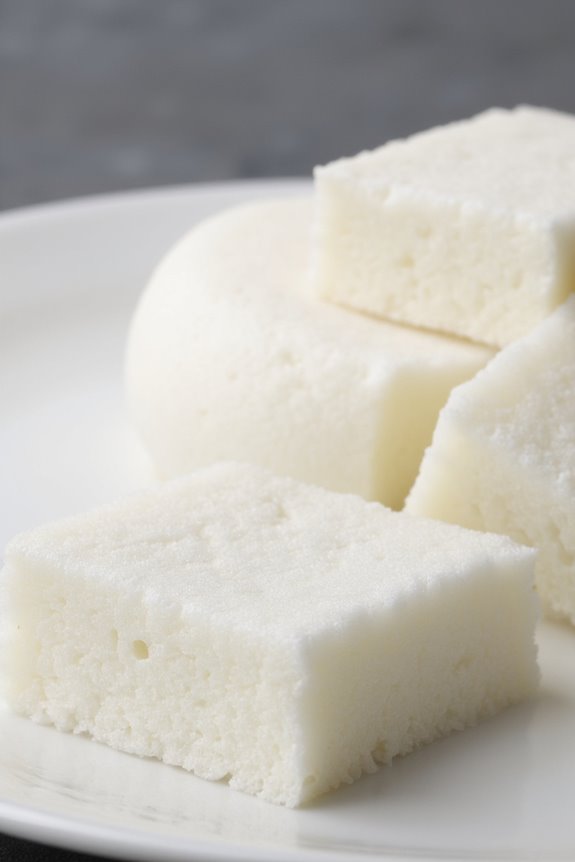
Baekseolgi, also known as steamed white rice cake, is a traditional Korean delicacy often enjoyed during special occasions and celebrations. Its name, “Baekseolgi,” derives from the Korean words for “white” and “snow,” reflecting its pristine color and soft, fluffy texture.
This delightful rice cake is made from rice flour, giving it a light and airy consistency that melts in your mouth. It’s a versatile cake that can be enjoyed on its own or with various sweet or savory toppings.
This recipe for Baekseolgi serves 4-6 people and involves steaming a mixture of rice flour, sugar, and water until it forms a tender, pillowy cake. While the process may seem simple, achieving the perfect texture requires some attention to detail. It’s crucial to use the right type of rice flour and to guarantee even steaming for the best results.
With a little patience and care, you can create a delicious Baekseolgi that’s sure to be a hit at any gathering.
Ingredients for Baekseolgi (serves 4-6):
- 2 cups sweet rice flour (also known as glutinous rice flour)
- 1/2 cup granulated sugar
- 1 cup water
- A pinch of salt
- Vegetable oil or cooking spray for greasing
Cooking Instructions:
- Prepare the Steamer: Start by setting up your steamer. Fill the bottom compartment with water and bring it to a gentle boil. If you don’t have a steamer, you can use a large pot with a steaming rack or a heatproof plate inverted in the bottom.
- Mix the Ingredients: In a large mixing bowl, combine the sweet rice flour, granulated sugar, and a pinch of salt. Gradually add water while stirring continuously until the mixture becomes a smooth, thick batter with a consistency similar to that of pancake batter.
- Grease the Pan: Lightly grease a round or square cake pan (8 to 9 inches in size) with vegetable oil or cooking spray to prevent the rice cake from sticking.
- Pour the Batter: Pour the prepared batter into the greased pan, smoothing the top with a spatula to ensure an even layer.
- Steam the Cake: Carefully place the pan into the steamer. Cover with a tight-fitting lid, and steam on medium heat for about 25-30 minutes. Don’t lift the lid during steaming to prevent heat from escaping, as this could affect the cake’s texture.
- Check for Doneness: After 25 minutes, check if the cake is cooked by inserting a toothpick into the center. If it comes out clean, the cake is ready. If not, steam for an additional 5 minutes and check again.
- Cool and Serve: Once done, remove the pan from the steamer and let the cake cool slightly in the pan before transferring it to a wire rack to cool completely. Cut into desired shapes and serve.
Extra Tips:
For the best Baekseolgi, always use fresh rice flour, as older flour may result in a denser cake. If you like, you can add toppings such as sweet red bean paste or sesame seeds for added flavor and texture.
Additionally, make sure the steamer’s lid is tightly closed to maintain a consistent steaming environment, and if possible, use a cloth to wrap the lid to catch any condensation that might drip onto the cake.
Enjoy your homemade Baekseolgi fresh for the best texture, as it tends to harden when refrigerated.
Songpyeon: Half-Moon Shaped Rice Cake
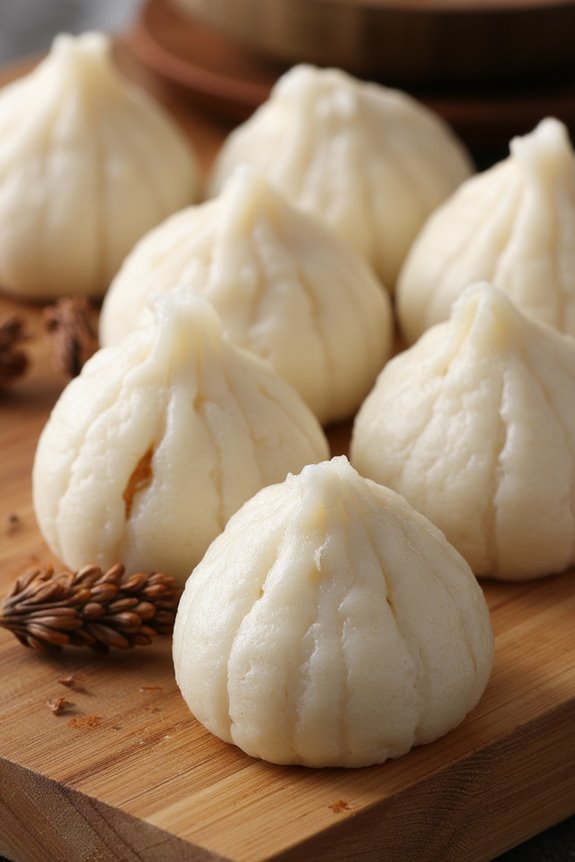
Songpyeon is a traditional Korean rice cake that’s often enjoyed during the Chuseok holiday, which is a harvest festival similar to Thanksgiving. These delightful treats are known for their unique half-moon shape and are typically filled with sweet or nutty fillings. The chewy texture and subtle sweetness of the rice cake, combined with the flavorful fillings, make songpyeon a beloved dessert or snack for many people.
Preparing songpyeon is a communal activity in Korean culture, often bringing families together in the kitchen to create these beautiful little cakes.
Songpyeon is made using glutinous rice flour, which gives it its characteristic chewiness. The dough is then shaped into small discs and filled with a variety of fillings such as sesame seeds, red bean paste, or chestnuts. Once filled, the discs are folded into a half-moon shape and steamed on a bed of pine needles, which impart a subtle fragrance to the cakes.
Making songpyeon is a labor of love, but the end result is a delicious and visually appealing treat that’s worth the effort.
Ingredients (Serves 4-6)
- 3 cups glutinous rice flour
- 1/2 cup hot water
- 1/4 teaspoon salt
- 1/2 cup sesame seeds
- 2 tablespoons honey
- 1/2 cup sweetened red bean paste
- 1/2 cup pine nuts or chopped chestnuts
- Fresh pine needles or parchment paper for steaming
Instructions
- Prepare the Dough: In a large bowl, mix the glutinous rice flour and salt. Gradually add the hot water while stirring with a wooden spoon until a dough forms. Knead the dough with your hands for about 10 minutes until it becomes smooth and elastic. Cover with a damp cloth and let it rest for 30 minutes.
- Prepare Fillings: While the dough is resting, prepare your fillings. For the sesame filling, grind the sesame seeds in a blender or food processor. Mix the ground sesame seeds with honey to form a paste. Set aside the sesame paste, red bean paste, and pine nuts or chestnuts.
- Shape the Rice Cakes: Divide the dough into small, even pieces about the size of a ping-pong ball. Flatten each piece into a small disc using your hands. Place a small spoonful of your desired filling in the center of each disc.
- Seal and Shape: Fold the disc over the filling to create a half-moon shape, pinching the edges together to seal it completely. Smooth out any seams with your fingers.
- Prepare for Steaming: Line a steamer basket with fresh pine needles or parchment paper. Place the songpyeon in the basket, leaving space between each to prevent sticking.
- Steam the Rice Cakes: Fill a pot with water and bring it to a boil. Place the steamer basket over the boiling water and cover. Steam the songpyeon for about 20-25 minutes until they’re cooked through and slightly translucent.
- Cool and Serve: Once steaming is complete, remove the songpyeon from the steamer and let them cool slightly. To prevent sticking, lightly brush each rice cake with a small amount of sesame oil. Serve warm or at room temperature.
Extra Tips
When making songpyeon, it’s important to ascertain the dough isn’t too wet or too dry; adjust the water or flour as necessary for the right consistency.
If you don’t have access to fresh pine needles, parchment paper can be a good alternative for steaming. Remember, the fillings can be adjusted to include your favorite nuts or seeds, and you can experiment with different natural colorings for the dough such as matcha or beet powder to add a vibrant touch to your songpyeon.
Enjoy the process and don’t hesitate to get creative with shapes and colors!
Ssuk Tteok: Mugwort Rice Cake

Ssuk Tteok, or Mugwort Rice Cake, is a traditional Korean delicacy that combines the earthy flavor of mugwort with the chewy texture of rice cake. This unique dish isn’t only a treat for the taste buds but also holds cultural significance in Korea, often enjoyed during festivals and special occasions.
The aromatic mugwort gives the rice cake its distinct green hue and is known for its health benefits, including its potential to improve digestion and reduce inflammation. Preparing Ssuk Tteok at home is a wonderful way to experience a piece of Korean heritage and delight your family and friends with its savory taste and charming appearance.
This recipe will guide you through the process of making Ssuk Tteok from scratch, allowing you to create a serving size suitable for 4-6 people. It involves using glutinous rice flour, fresh mugwort, and a few other key ingredients to achieve the perfect balance of flavor and texture.
While the process may seem intricate, following these steps will guarantee a rewarding culinary experience. Delight in the subtle aroma and soft, chewy texture of these rice cakes as you enjoy a taste of Korea in your own kitchen.
Ingredients for 4-6 servings:
- 2 cups glutinous rice flour
- 1/2 cup fresh mugwort leaves (or 1 tablespoon dried mugwort powder)
- 1/4 cup sugar
- 1/2 teaspoon salt
- 3/4 cup water
- Oil for greasing
- Optional: red bean paste or sweet filling of choice
Cooking Instructions:
- Prepare the Mugwort: If using fresh mugwort leaves, rinse them thoroughly under cold water to remove any dirt. Blanch the leaves in boiling water for 1-2 minutes until they’re wilted. Drain and rinse them under cold water to stop the cooking process. Squeeze out any excess water and finely chop the leaves. If using dried mugwort powder, this step can be skipped.
- Mix the Dry Ingredients: In a large mixing bowl, combine the glutinous rice flour, sugar, and salt. Stir the ingredients together until well integrated.
- Incorporate Mugwort: Add the chopped mugwort leaves (or mugwort powder) into the dry mixture. Mix until the mugwort is evenly distributed throughout the flour mixture, confirming the color is consistently green.
- Add Water: Gradually add water to the mixture while stirring continuously. The goal is to form a dough that’s soft but not sticky. You may need to adjust the water quantity slightly to achieve the right consistency.
- Knead the Dough: Transfer the dough onto a clean, flat surface. Knead it for about 5-10 minutes until it becomes smooth and elastic. This step is vital for achieving the desired chewy texture.
- Shape the Rice Cakes: Divide the dough into small, equal-sized pieces. Roll each piece into a ball and then flatten it slightly to form a disc. If using a filling, place a small amount in the center of each disc and seal the edges by pinching them together.
- Steam the Rice Cakes: Prepare a steamer by lining it with parchment paper or lightly greasing it with oil to prevent sticking. Place the rice cakes in the steamer, leaving space between each one. Steam for 15-20 minutes on medium heat, until they become translucent and slightly firm to the touch.
- Cool and Serve: Once cooked, remove the rice cakes from the steamer and allow them to cool slightly before serving. They can be enjoyed warm or at room temperature.
Extra Tips:
When making Ssuk Tteok, it’s important to confirm that the dough is well-kneaded to achieve the perfect chewy texture. If fresh mugwort is unavailable, dried mugwort powder can be used as an alternative, although the flavor may be slightly less intense.
When steaming, make sure to leave enough space between the rice cakes to allow for even cooking. If you prefer a sweeter version, consider adding a sweet filling like red bean paste or sweetened sesame seeds. Enjoy your homemade Ssuk Tteok as a delightful snack or dessert, accompanied by a cup of tea.
Hwajeon: Pan-Fried Rice Cake With Flowers

Hwajeon, a delightful traditional Korean dessert, is a pan-fried rice cake adorned with colorful edible flowers. Often enjoyed during the spring and autumn seasons, this visually stunning dish combines the subtle sweetness of glutinous rice flour with the delicate flavors of seasonal blossoms, offering a unique blend of taste and aesthetics. Hwajeon isn’t only a treat for the taste buds but also a visual feast, making it a perfect centerpiece for festive occasions or a refined afternoon tea.
Creating Hwajeon at home allows you to experiment with various edible flowers like azaleas, chrysanthemums, or pansies, depending on what’s available. The process involves making a dough from glutinous rice flour, shaping it into small discs, and then pressing fresh flowers onto the surface before frying them to a golden crisp. The result is a delicate, chewy rice cake with a slightly crispy exterior, beautifully accented with the hues and fragrances of the flowers.
Ingredients for 4-6 servings:
- 2 cups glutinous rice flour
- 1/2 teaspoon salt
- 3/4 cup hot water
- 1 tablespoon honey
- Edible flowers (e.g., azaleas, pansies, chrysanthemums)
- 3 tablespoons vegetable oil for frying
Cooking Instructions:
- Prepare the dough: In a large bowl, combine the glutinous rice flour and salt. Gradually add the hot water while mixing with a spoon until the mixture forms a dough. Knead the dough for about 5 minutes until it becomes smooth and elastic. Cover with a damp cloth and let it rest for 30 minutes.
- Shape the rice cakes: After resting, divide the dough into small, equal-sized pieces (about the size of a golf ball). Flatten each piece into a disc approximately 2-3 inches in diameter and about 1/4 inch thick.
- Decorate with flowers: Gently press edible flowers onto the surface of each rice cake, making certain they adhere well. Use a damp cloth to press the flowers lightly to help them stick to the dough.
- Fry the rice cakes: Heat the vegetable oil in a non-stick skillet over medium heat. Once the oil is hot, add the rice cakes, flower-side up, and fry for about 2-3 minutes until the bottoms are golden brown. Carefully flip the rice cakes and fry the other side for an additional 1-2 minutes.
- Finish and serve: Remove the rice cakes from the skillet and place them on a paper towel to absorb excess oil. Drizzle with honey before serving to add a touch of sweetness.
Extra Tips:
When making Hwajeon, verify that the flowers you use are free from pesticides and are safe for consumption. You can find edible flowers at specialty grocery stores or grow them yourself to verify freshness and safety.
Additionally, be mindful of the oil temperature during frying; too hot, and the rice cakes can burn quickly, too low, and they may absorb too much oil. Enjoy your Hwajeon warm or at room temperature for the best texture and flavor.
Bukkumi: Pan-Fried Rice Cake Dumplings
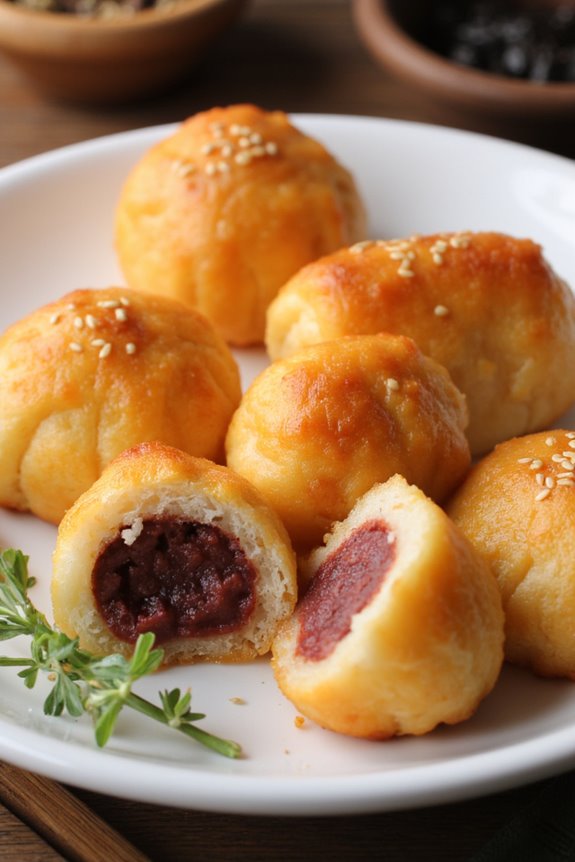
Bukkumi, also known as pan-fried rice cake dumplings, is a delightful Korean treat that combines the chewy texture of rice cakes with a crispy outer layer. These dumplings are typically filled with sweetened red bean paste, black sesame seeds, or other sweet fillings, offering a perfect balance of textures and flavors.
Traditionally enjoyed as a dessert or snack, Bukkumi can be served warm or at room temperature, making it a versatile dish for any occasion. The process of making Bukkumi is both simple and rewarding, allowing you to enjoy a taste of Korean cuisine from your own kitchen.
The key to making perfect Bukkumi lies in achieving the ideal texture of the rice cake dough and a harmonious blend of fillings. The dough is made from glutinous rice flour, which gives it a delightful chewiness. The dumplings are then pan-fried to create a crispy exterior. While red bean paste is a classic filling, you can experiment with other options to suit your taste.
Whether you’re new to Korean cooking or a seasoned chef, Bukkumi is a dish that promises satisfaction with every bite.
Ingredients for 4-6 servings:
- 2 cups glutinous rice flour
- 1 cup water
- 1/2 teaspoon salt
- 1 tablespoon sugar
- 1 cup sweet red bean paste (or other preferred filling)
- 2 tablespoons vegetable oil
- 1 tablespoon sesame seeds (optional for garnish)
Cooking Instructions:
- Prepare the Dough: In a large mixing bowl, combine the glutinous rice flour, salt, and sugar. Gradually add water while stirring to form a smooth and pliable dough. Knead the dough for about 5 minutes until it reaches a soft, elastic texture. Cover with a damp cloth and let it rest for 20 minutes.
- Divide and Shape the Dough: After resting, divide the dough into 12 equal portions. Roll each portion into a ball, then flatten into a disc shape with your palms, about 1/4 inch thick.
- Fill the Dumplings: Place a teaspoon of sweet red bean paste in the center of each disc. Carefully fold the dough over the filling and seal the edges by pinching them together to form a half-moon shape. Confirm there are no gaps or openings.
- Pan-fry the Bukkumi: Heat a non-stick skillet over medium heat and add the vegetable oil. Once the oil is hot, place the dumplings in the skillet, making sure they aren’t touching. Pan-fry for 3-4 minutes on each side, or until they’re golden brown and crispy.
- Serve the Bukkumi: Remove the dumplings from the skillet and place them on a paper towel to absorb any excess oil. Serve warm or at room temperature, optionally garnished with sesame seeds.
Extra Tips:
When making Bukkumi, it’s important to keep the dough covered with a damp cloth to prevent it from drying out. If the dough feels too sticky, lightly dust your hands with glutinous rice flour when shaping the dumplings.
Be gentle when sealing the edges to avoid tearing the dough. If you want to try different fillings, consider using sweetened chestnut puree or finely chopped nuts for a variation in flavor and texture.
Additionally, adjusting the heat during frying will help confirm that the dumplings cook evenly without burning. Enjoy your homemade Bukkumi as an authentic Korean treat!
